
GLP-1 Agonists & DPP-4 Inhibitors: The Incretin Revolution
The drugs behind the household names — Ozempic, Wegovy, Mounjaro — all trace back to a single gut hormone released when you eat. Understand that hormone, GLP-1, and you understand why these medicines lower glucose without causing hypos, cause dramatic weight loss, and come in two flavours: a powerful injection and a gentler pill.
Here's a curious fact that launched a whole class of drugs: if you give someone glucose by mouth, their pancreas releases far more insulin than if you give the exact same amount of glucose straight into a vein. The difference is that eating triggers the gut to release hormones that prime the pancreas — a phenomenon called the incretin effect. The main incretin hormone is GLP-1, and in type 2 diabetes this effect is blunted. The insight was simple but powerful: restore or amplify GLP-1, and you restore a whole clever system of glucose control. That single idea gave us two drug classes and the most talked-about medicines in modern medicine.
What GLP-1 actually does
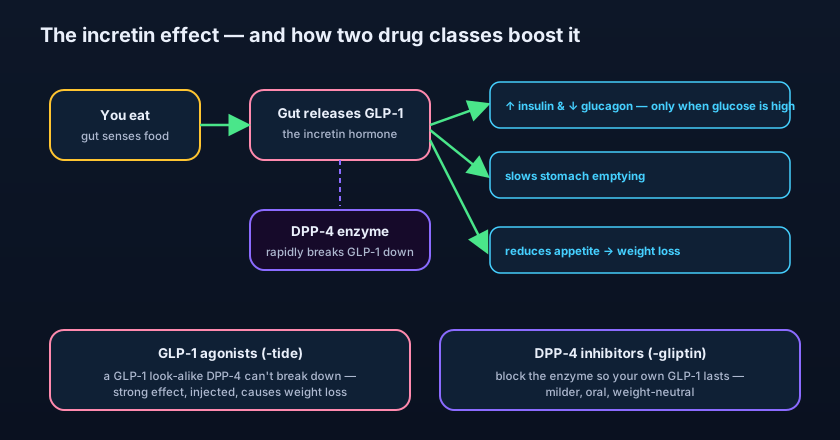
One gut hormone, four glucose-lowering actions — all glucose-dependent. GLP-1 is released by the gut after a meal and does several helpful things at once. It tells the pancreas to release more insulin AND less glucagon (glucagon is insulin's opposite, which raises glucose) — but, crucially, only when blood glucose is high. This glucose-dependence is the reason these drugs don't cause hypoglycaemia on their own: when glucose is normal, GLP-1 stops pushing. It also slows the stomach's emptying, so glucose from a meal enters the blood more gently, and it acts on the brain to reduce appetite and increase fullness. That appetite effect is why GLP-1 drugs cause substantial weight loss — and why the same molecules are now licensed specifically for obesity. Four actions, one hormone, and every one of them helps a person with type 2 diabetes.
Two ways to boost it — injection vs pill
There's a catch: natural GLP-1 is destroyed within minutes by an enzyme called DPP-4. Two drug classes exploit this in opposite ways. The GLP-1 receptor agonists (the '-tides' — semaglutide/Ozempic, liraglutide, and the dual-acting tirzepatide/Mounjaro) are engineered GLP-1 look-alikes that DPP-4 can't break down, so they act powerfully and last a long time — many are a once-weekly injection. They give strong glucose-lowering AND significant weight loss, and newer members have been shown to protect the heart and kidneys, so they've become a preferred choice in type 2 diabetes with heart disease. Their main side effect is gastrointestinal — nausea and vomiting, especially early, from the slowed stomach. The DPP-4 inhibitors (the '-gliptins' — sitagliptin, linagliptin) take the other route: instead of adding a GLP-1 mimic, they block the DPP-4 enzyme so the patient's OWN GLP-1 survives longer. They're oral, once-daily and very well tolerated, but their effect is milder and they're weight-neutral (no meaningful weight loss). So the trade-off is clear: injectable agonists for power and weight loss, oral gliptins for convenience and gentleness.
- The incretin GLP-1 (released after meals) raises insulin & lowers glucagon — only when glucose is high.
- Glucose-dependence = no hypoglycaemia on their own; GLP-1 also slows the stomach and cuts appetite.
- GLP-1 agonists (-tide, e.g. semaglutide): injected, powerful, cause weight loss, protect heart/kidney.
- DPP-4 inhibitors (-gliptin): oral, well-tolerated, milder, weight-neutral.
- GLP-1 agonists' main side effect is GI (nausea/vomiting), worst early on.
The reason incretin drugs don't cause hypos — while insulin and sulfonylureas do — is one word: glucose-dependence. GLP-1 only tells the pancreas to release insulin when blood glucose is actually high; as the glucose falls back to normal, the signal switches itself off. It's a built-in brake that the older insulin-forcing drugs simply don't have. This is also why a GLP-1 agonist can be combined safely with metformin without much hypo risk, but combining it with insulin or a sulfonylurea reintroduces that risk — because now there's a drug in the mix that pushes insulin regardless of the glucose level. The smart hormone knows when to stop; the blunt ones don't.
- Expecting a hypo from a GLP-1 agonist or gliptin alone — glucose-dependence prevents it.
- Expecting weight loss from a DPP-4 inhibitor — gliptins are weight-neutral.
- Starting a GLP-1 agonist at full dose — nausea; titrate up slowly.
- Forgetting hypo risk returns when combined with insulin or a sulfonylurea.
Why don't GLP-1 agonists cause hypoglycaemia when used alone?
- GLP-1 is a gut hormone that raises insulin/lowers glucagon (glucose-dependent), slows the stomach, cuts appetite.
- GLP-1 agonists (-tide): injected, potent, weight loss, heart/kidney protection.
- DPP-4 inhibitors (-gliptin): oral, gentle, weight-neutral — preserve your own GLP-1.
- No hypos alone, but risk returns when combined with insulin or a sulfonylurea.
- Katzung BG. Basic & Clinical Pharmacology — Pancreatic Hormones & Antidiabetic Drugs (incretins).
- Brunton LL, et al. Goodman & Gilman's The Pharmacological Basis of Therapeutics — GLP-1 receptor agonists & DPP-4 inhibitors.
- ADA — Standards of Care in Diabetes (GLP-1 RAs & cardiovascular/renal outcomes).
- Whalen K. Lippincott Illustrated Reviews: Pharmacology — Incretin-based therapies.