
Antiemetics: Choosing the Right Drug for the Right Cause
There's no single 'best' anti-sickness drug — there's a best one for each cause. The secret, from the foundations map, is that different triggers of vomiting act through different receptors, and each antiemetic blocks one of them. Match the drug to the pathway, and you'll treat nausea like an expert.
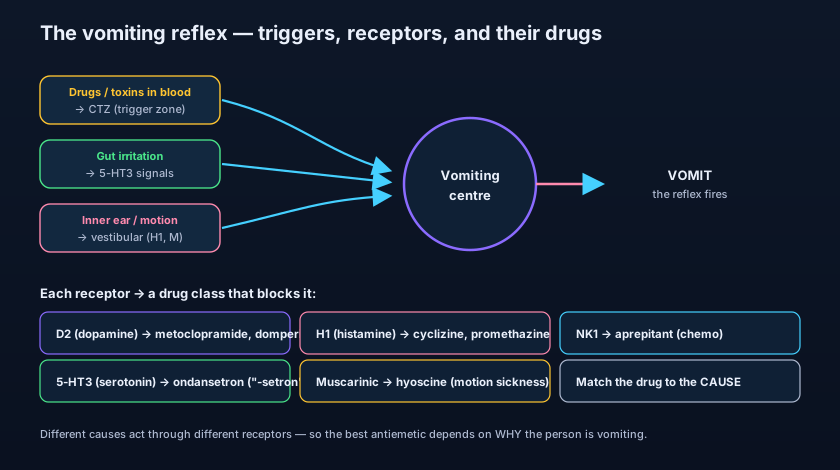
In the foundations article you met the map of vomiting: several different triggers — drugs and toxins, gut irritation, motion, chemotherapy — each act through a particular receptor, all converging on the brain's vomiting centre. That map is the whole key to using antiemetics well, because each class of anti-sickness drug simply blocks one of those receptors. So the real skill isn't memorising a list of antiemetics; it's asking 'which pathway is this person's nausea coming through?' and picking the drug that blocks it. Let's walk through the classes, each tied to its receptor and its best use.
The classes, by receptor
Four main receptor targets, four families of antiemetic. The dopamine (D2) blockers — metoclopramide, domperidone and prochlorperazine — are versatile general antiemetics, good for nausea from drugs, metabolic upset and gastro-intestinal causes; metoclopramide also speeds the gut (a prokinetic, next article). A caution to remember: because they block dopamine, D2 blockers can cause the movement side effects you met with antipsychotics in the CNS chapter — restlessness and, especially in the young, acute muscle spasms (metoclopramide is used cautiously in young people for this reason; domperidone crosses less into the brain and does this less). The 5-HT3 (serotonin) blockers — the '-setrons', like ondansetron — are powerful and are the drugs of choice for the strong nausea of chemotherapy and after surgery; their main notable effects are constipation and, as a class caution, some QT prolongation (a callback to the cardiac chapter). The antihistamines and antimuscarinics — cyclizine, promethazine, and hyoscine — are best for motion sickness and inner-ear vertigo, because those work through H1 and muscarinic pathways; they tend to cause drowsiness and dry mouth (the familiar anticholinergic pattern). And the NK1 blockers — aprepitant — are reserved for the severe, delayed nausea of chemotherapy, usually added to a 5-HT3 blocker and a steroid.
Matching drug to cause — worked examples
Putting the map to work makes the choices obvious. Motion sickness or vertigo → an antihistamine (cyclizine) or hyoscine, because those go through H1/muscarinic pathways — a 5-HT3 blocker would barely help. Chemotherapy → a 5-HT3 blocker (ondansetron), usually with a steroid, and aprepitant (NK1) added for severe or delayed sickness. After surgery → ondansetron works well. Nausea from a drug, or from a metabolic upset like kidney failure → a D2 blocker (metoclopramide or, if you want to avoid brain side effects, domperidone). Pregnancy sickness needs particular care about safety, and specific agents (often an antihistamine first-line) are chosen with that in mind. A common and sensible real-world approach for difficult nausea is to combine antiemetics from different classes — hitting more than one receptor at once, the same logic as combining drugs elsewhere. The single message to carry from this article is the one from the map: don't ask for 'an anti-sickness drug' in the abstract — identify the cause, find its receptor, and choose the antiemetic that blocks it.
- Match the antiemetic to the CAUSE — each class blocks a different vomiting-pathway receptor.
- D2 blockers (metoclopramide, domperidone): general/drug/metabolic nausea; risk of movement side effects.
- 5-HT3 blockers (ondansetron): chemotherapy & post-op — powerful; cause constipation, mild QT prolongation.
- Antihistamines/antimuscarinics (cyclizine, hyoscine): motion sickness & vertigo (drowsiness, dry mouth).
- NK1 blockers (aprepitant): severe/delayed chemotherapy nausea; combine classes for difficult nausea.
The single most valuable habit in treating nausea is to name the cause before naming the drug. Ask 'why is this person vomiting?' and the receptor — and therefore the right antiemetic — usually follows automatically. Sea-sick on a boat? That's the inner ear, so histamine and muscarinic pathways, so cyclizine or hyoscine. Just started chemotherapy? That's a flood of serotonin, so ondansetron. Vomiting from a drug or from kidney failure? That's the dopamine trigger zone, so a D2 blocker. The map turns an intimidating pile of drug names into a simple lookup: cause → receptor → drug. And it explains the failures too — the reason a friend's travel-sickness tablet does nothing for chemotherapy nausea is that they're aimed at completely different receptors. Learn the map once, and you'll never again reach blindly for 'something for the sickness'.
- Using the same antiemetic regardless of cause — match the drug to the receptor.
- Giving high-dose metoclopramide to young patients — risk of acute muscle spasm (dystonia).
- Forgetting ondansetron's constipation and QT-prolongation cautions.
- Using a 5-HT3 blocker for motion sickness — the wrong receptor; use an antihistamine/hyoscine.
A patient has severe nausea from chemotherapy. Which antiemetic class is first-line?
- Match the antiemetic to the cause — each class blocks a different vomiting-pathway receptor.
- D2 blockers (metoclopramide) = general/drug nausea (movement side effects); 5-HT3 (ondansetron) = chemo/post-op.
- Antihistamines/antimuscarinics (cyclizine, hyoscine) = motion sickness/vertigo; NK1 (aprepitant) = severe chemo.
- Name the cause, find its receptor, pick the drug — and combine classes for difficult nausea.
- Katzung BG. Basic & Clinical Pharmacology — Drugs Used to Treat Nausea & Vomiting.
- Brunton LL, et al. Goodman & Gilman's The Pharmacological Basis of Therapeutics — Antiemetic agents.
- NICE / ASCO — Guidelines on antiemetic use.
- Whalen K. Lippincott Illustrated Reviews: Pharmacology — Antiemetics.