
Endometriosis and Fibroids: Starving Oestrogen-Driven Disease
Two of the commonest reasons a woman is told her pain or her bleeding is "just part of being a woman" turn out to share one master switch: oestrogen. Endometrial tissue that has strayed outside the uterus, and knots of smooth muscle that grow inside its wall, are both fed by the same hormone that drives the normal cycle. That single fact hands us the entire treatment strategy — not to cut the disease out first, but to starve it. Lower the oestrogen, or block it, and the tissue quietens, the bleeding settles, the fibroid shrinks. The art is doing that without inflicting a premature menopause on a young woman.
A 29-year-old comes to clinic exhausted by pain she has carried since her teens. Every period brings cramping that painkillers barely touch, deep pain during sex, and a bloating that empties her energy for a week. She has been trying to conceive for two years without success. A laparoscopy finds endometriosis — islands of endometrial tissue growing on her ovaries and pelvic wall, bleeding a little with every cycle into a space that has no way to drain. In the next room sits a 44-year-old with a very different story but the same underlying culprit: months of floods rather than periods, clots, a dragging pelvic heaviness, and a haemoglobin low enough to leave her breathless on the stairs. Her scan shows uterine fibroids. Two women, two diseases — and one hormone quietly feeding both.
One hormone, two diseases
Both conditions are, at heart, oestrogen-dependent growths. In endometriosis, endometrial-type tissue implants outside the uterine cavity — on the ovaries, the peritoneum, the pouch of Douglas. Like the lining inside the womb, it carries oestrogen receptors and responds to the cycle: it proliferates, it bleeds, and because that blood cannot escape it drives inflammation, adhesions, chronic pelvic pain, dysmenorrhoea and subfertility. Uterine fibroids (leiomyomas) are benign tumours of the myometrial smooth muscle; they too are studded with oestrogen (and progesterone) receptors and enlarge under hormonal drive, producing heavy menstrual bleeding and "bulk" symptoms — pressure, a palpable mass, urinary frequency. The molecular biology of oestrogen, progesterone and the hypothalamic–pituitary–gonadal (HPG) axis is taught in full in the Endocrine section; here we take those molecules as given and put them to work as drug targets. The unifying therapeutic idea is simple: reduce oestrogen exposure, or oppose it, and both diseases regress.
Think of oestrogen as the fertiliser and both diseases as weeds. You can pull weeds one by one (surgery), but as long as you keep watering the soil they grow back. The smarter first move is to turn off the tap. Continuous hormonal therapy is exactly that: it stops the cyclical surge of fertiliser, and the weeds — the endometriotic deposits, the fibroid — wither for want of it. Add-back therapy, later in this chapter, is the trick of leaving the tap barely dripping: just enough water to keep the lawn (your bones) alive, but far too little to feed the weeds.
Endometriosis: the treatment ladder
Start with symptom relief, then climb into hormonal suppression as the disease demands. The first rung is symptomatic: NSAIDs (such as mebeverine's cousins in the analgesic world — ibuprofen, naproxen, mefenamic acid) reduce the prostaglandin-driven cramping of dysmenorrhoea and are often combined with paracetamol. The second rung is hormonal suppression, whose whole purpose is to abolish the cyclical oestrogen swings that feed the lesions — in effect creating either a "pseudo-pregnancy" (a steady progestogen-dominant state) or a "pseudo-menopause" (a low-oestrogen state). The combined oral contraceptive pill, taken continuously (back-to-back packs, skipping the withdrawal bleed), keeps the endometrium and its ectopic cousins thin and quiet. Progestogens do the same by a different route — oral progestogens (such as norethisterone or dienogest), the levonorgestrel intrauterine system (IUS), or depot medroxyprogesterone acetate (DMPA) injections — all suppress ovulation and decidualise then atrophy the tissue. These same agents are the workhorses of the Menstrual-bleeding and Contraception chapters; here they are re-purposed to silence pain rather than to prevent pregnancy.
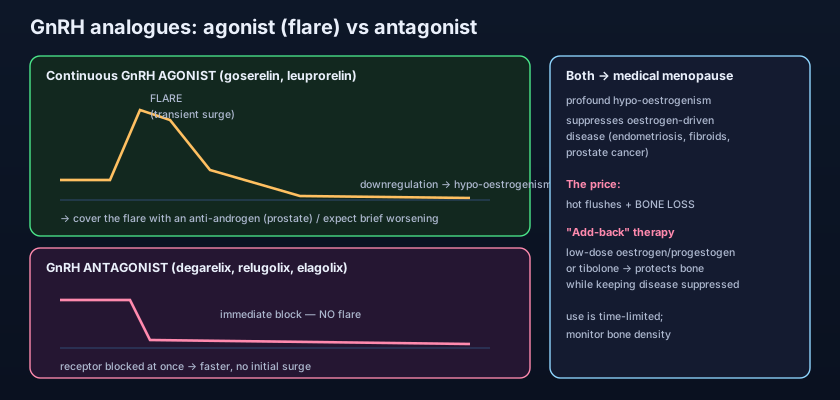
When these fail — when pain persists despite continuous pills and progestogens — we climb to the top of the ladder: the GnRH analogues. This is the class that gives this chapter its signature figure, and understanding it is worth more marks in an exam than memorising any drug list. Two families sit here: the GnRH agonists (goserelin, leuprorelin, triptorelin) and the newer oral GnRH antagonists (relugolix, elagolix). Both drive the ovary into a low-oestrogen "medical menopause" — but they get there by opposite routes, and that difference is the whole point.
The GnRH-analogue mechanism: pulses, a flare, and a switch-off
Normal GnRH is a rhythm, not a level — and the rhythm is everything. The hypothalamus releases GnRH in pulses, roughly every 60–90 minutes. Those pulses are what keep the pituitary gonadotrophs alive and secreting FSH and LH, which in turn drive the ovary to make oestrogen. The counter-intuitive fact — the one the figure exists to teach — is that the pituitary responds to the pulsatility, not merely to the presence, of GnRH. Flood it with continuous, unremitting GnRH stimulation and the response is not more FSH/LH but, after a brief burst, far less. A GnRH agonist is a synthetic, long-acting version of the hormone that binds the receptor continuously. At first this causes exactly what you would expect: a flare — a transient surge of FSH and LH, and with it a rise in oestrogen that can briefly worsen symptoms (more pain, a heavier bleed) in the first week or two. Then the receptor, hammered without rest, downregulates and desensitises. FSH and LH fall, the ovary is no longer stimulated, and oestrogen plunges to menopausal levels. The patient is now in a reversible medical menopause.
A GnRH antagonist skips the drama. Instead of over-stimulating the receptor into exhaustion, it simply blocks it from the first dose — competitively occupying the GnRH receptor so the hypothalamus's own pulses can't get through. FSH, LH and oestrogen fall immediately, with no initial flare. That is the practical advantage of relugolix and elagolix over goserelin and leuprorelin: no transient worsening, oral dosing, and a dose-dependent control of just how much oestrogen you suppress. The identical flare-versus-no-flare distinction reappears in the Oncology / prostate chapter: there, a GnRH agonist is used for androgen-deprivation therapy in prostate cancer, and its testosterone flare can transiently worsen the tumour — which is why an anti-androgen is given as "cover" for the first weeks, or a GnRH antagonist is chosen to avoid the flare altogether. Same mechanism, different gland, same clinical footnote.
The price of hypo-oestrogenism — and "add-back"
A medical menopause works because oestrogen starves the disease — but oestrogen also protects bone, blood vessels and mood, so removing it has a cost. Patients get menopausal symptoms: hot flushes, night sweats, vaginal dryness, mood change. More importantly, sustained hypo-oestrogenism causes loss of bone mineral density, so GnRH-agonist therapy is time-limited (classically capped around six months when used alone). The elegant solution is add-back therapy: giving a small amount of hormone back — low-dose combined oestrogen/progestogen, or tibolone (a synthetic steroid with weak oestrogenic, progestogenic and androgenic activity) — alongside the GnRH analogue. The relugolix combination product bundles this in directly (relugolix with oestradiol and norethisterone). There is a therapeutic window here: enough oestrogen to protect bone and quell flushes, but not enough to re-feed the endometriosis. This is exactly the reasoning of the Menopause chapter, where hypo-oestrogenism, its bone consequences and hormone replacement are covered in depth — here we simply borrow a slice of HRT to make a medical menopause tolerable long-term.
The most common exam trap on GnRH agonists is the flare. A student expects a drug that suppresses the ovary to lower hormones from day one — but a GnRH agonist does the opposite first. Anyone with severe disease that a flare could dangerously worsen (large endometriomas, or spinal metastases in the prostate-cancer analogue) needs either an anti-androgen/hormonal cover through the flare, or a GnRH antagonist that has no flare at all. Remember the rule: continuous agonist = flare then suppression; antagonist = suppression from the start.
- Endometriosis (ectopic endometrium) and fibroids (leiomyomas) are both oestrogen-dependent — treatment lowers or opposes oestrogen.
- Endometriosis ladder: NSAIDs → continuous combined pill / progestogens (oral, IUS, DMPA) → GnRH analogues for refractory disease.
- GnRH is normally pulsatile; continuous stimulation flips the pituitary from stimulation to shut-down.
- GnRH AGONIST: initial flare (FSH/LH/oestrogen surge) → then downregulation → hypo-oestrogenism.
- GnRH ANTAGONIST (relugolix, elagolix): receptor blockade from dose one, no flare, oral.
- Hypo-oestrogenism costs menopausal symptoms + bone loss → time-limit use and add "add-back" hormone (or tibolone).
Fibroids: controlling bleeding, then shrinking the mass
The two problems fibroids cause — heavy bleeding and bulk — call for two different pharmacological answers. For heavy menstrual bleeding the first-line non-hormonal options are tranexamic acid — an antifibrinolytic that stabilises the clot in the bleeding endometrium (taken only on the days of heavy flow) — and NSAIDs, which also reduce prostaglandin-mediated blood loss and pain. The most effective device is the levonorgestrel intrauterine system (IUS), which thins the endometrium locally and can dramatically cut menstrual loss; these bleeding tools are shared verbatim with the Menstrual-bleeding chapter. To shrink the fibroid itself — for instance to correct anaemia and reduce operative difficulty before surgery — a GnRH agonist is used pre-operatively: three months of goserelin or leuprorelin lowers oestrogen, shrinks the fibroid and lets the haemoglobin recover so the woman goes to theatre in better shape (and sometimes allows a smaller operation). Ulipristal acetate, a selective progesterone-receptor modulator (SPRM) that directly blunts the progesterone drive to fibroid growth and bleeding, is effective and was once widely used — but a signal of serious liver injury led regulators to restrict it sharply, so it is now reserved for narrow circumstances with liver-function monitoring. Aromatase inhibitors, which block the peripheral conversion of androgens to oestrogen, are used in selected refractory cases.
Symptomatic: NSAIDs (ibuprofen, naproxen, mefenamic acid), tranexamic acid (antifibrinolytic, bleeding days only). Suppression: continuous combined pill; progestogens — dienogest/norethisterone (oral), levonorgestrel IUS, DMPA. Medical menopause: GnRH agonists (goserelin, leuprorelin, triptorelin — flare then suppression) and GnRH antagonists (relugolix, elagolix — no flare, oral), usually with add-back oestrogen/progestogen or tibolone. Fibroid-specific: ulipristal acetate (SPRM, liver-restricted); aromatase inhibitors in selected cases. When drugs fail or the mass is too large, care hands over to surgery — myomectomy or hysterectomy for fibroids, excision/ablation for endometriosis.
Medicine buys time and improves conditions; it rarely cures the anatomy. It is worth being honest about the limits of drug therapy. Hormonal suppression controls symptoms and can shrink lesions, but stop the drug and the oestrogen returns and so, often, does the disease — endometriosis in particular tends to recur once suppression is lifted, and fibroids regrow after a GnRH agonist is stopped. That is why the medical strategy is framed around goals: relieving pain, controlling bleeding, correcting anaemia, preserving fertility, or bridging a woman to surgery or to the natural fall in oestrogen at menopause (when both diseases quieten on their own). When symptoms are severe and refractory, when a fibroid is very large, or when fertility is the priority and endometriosis is distorting the pelvis, medical therapy gives way to surgery — but that decision, and the operative technique, belong to the gynaecology-surgery literature rather than this pharmacology chapter.
- Fibroid bleeding: tranexamic acid and NSAIDs (non-hormonal) and the levonorgestrel IUS are first-line.
- GnRH agonists shrink fibroids and correct anaemia pre-operatively — a bridge, not a cure.
- Ulipristal acetate (an SPRM) is effective but restricted after a serious liver-injury signal — monitor liver function.
- Aromatase inhibitors (blocking androgen→oestrogen conversion) are reserved for selected refractory cases.
- Both diseases recur when suppression stops; medicine buys goals (pain, bleeding, fertility, a bridge to surgery/menopause).
- Forgetting the GnRH-agonist flare — starting goserelin/leuprorelin without warning that symptoms can transiently worsen, or without flare cover in high-risk disease.
- Running a GnRH analogue long-term without add-back therapy or bone monitoring — sustained hypo-oestrogenism causes real bone loss.
- Prescribing ulipristal acetate as though it were still first-line — ignoring the liver-injury restriction and the need for liver-function monitoring.
A 32-year-old with severe endometriosis is started on the GnRH agonist goserelin. In the first week her pelvic pain briefly worsens, and you plan to continue treatment for several months. Which two statements best explain the pain and guide safe long-term use?
- Endometriosis and fibroids are both oestrogen-driven, so treatment starves the disease of oestrogen or opposes it.
- Endometriosis ladder: NSAIDs → continuous combined pill/progestogens (oral, IUS, DMPA) → GnRH analogues for refractory disease.
- GnRH agonists (goserelin, leuprorelin) flare then downregulate the pituitary into hypo-oestrogenism; antagonists (relugolix, elagolix) block the receptor immediately with no flare.
- Hypo-oestrogenism costs menopausal symptoms and bone loss, so use is time-limited with add-back hormone; fibroids also use tranexamic acid/IUS for bleeding and ulipristal (liver-restricted) — with surgery when medicine is not enough.
- Rang & Dale's Pharmacology — The reproductive system: gonadotrophin-releasing hormone analogues and sex-hormone antagonists.
- Katzung Basic & Clinical Pharmacology — Hypothalamic & pituitary hormones; gonadal hormones and inhibitors.
- British National Formulary (BNF) — Gonadorelin analogues; progestogens; ulipristal acetate; tranexamic acid.
- NICE NG73 — Endometriosis: diagnosis and management.
- NICE NG88 — Heavy menstrual bleeding: assessment and management.
- FSRH / UK guidance — Progestogen-only and combined hormonal contraception; levonorgestrel intrauterine system.