
The Toxidromes: Reading the Poison From the Bedside
A poisoned patient rarely arrives with a label. There is no bottle in the pocket, no reliable history, sometimes no history at all — just a body doing strange things. And yet, long before a single level comes back from the lab, you can often name the culprit. The trick is that most poisons don't act at random: they pull the same few levers — heart rate, pupils, skin, mind, gut — in a recognizable pattern. That pattern is a toxidrome, and reading it is the difference between treating blind and treating the poison.
An unresponsive man is wheeled into resus by paramedics who found him slumped in a doorway. There is no wallet, no story, no witness. You start not with a name but with the body: his breathing is slow and shallow — six shaky breaths a minute — and his oxygen is falling. You lift an eyelid and there they are: pupils like pinpricks, tiny black dots that don't widen in the dark room. His skin is cool and unremarkable, his bowel sounds quiet. You have not seen a drug, a bag, or a needle, yet the pattern has already spoken: depressed breathing, depressed consciousness, pinpoint pupils. This is an opioid toxidrome, and the treatment — a dose of naloxone — goes in before any blood result exists. Minutes later he is awake and swearing at you. You read the poison from the bedside, and it was right.
What a toxidrome actually is
A toxidrome is a fingerprint — a repeatable constellation of physical signs that points to a class of poison. The word fuses "toxic" and "syndrome": a syndrome caused by a toxin. What makes it useful is that it draws on findings you can gather in ninety seconds at the bedside, no laboratory required. Five channels carry almost all of the information. Vital signs — heart rate, blood pressure, temperature, respiratory rate. Pupils — constricted (miosis) or dilated (mydriasis). Skin — sweaty or bone-dry, flushed or pale. Mental state — agitated and hallucinating, or sedated and unrousable. And bowel sounds — hyperactive or silent. Line those five up and each major class of poison prints a different, recognizable pattern across them. The point is speed: toxicology levels can take hours, and a critically poisoned patient does not have hours. The toxidrome lets you treat the pattern now and confirm the drug later. This is the reflex the Approach to the poisoned patient chapter drills — resuscitate, examine, and classify before you identify.
The cholinergic toxidrome: too much acetylcholine
Block the enzyme that clears acetylcholine and the neurotransmitter floods every synapse it reaches. The organophosphate insecticides and nerve agents inhibit acetylcholinesterase (AChE), the enzyme that switches off acetylcholine. With the off-switch broken, acetylcholine piles up at every cholinergic receptor at once — and the picture splits along the two receptor families the Autonomic nervous system chapter separates. The muscarinic side dominates the classic toxidrome and gives the wettest, most miserable presentation in medicine, captured by two mnemonics. SLUDGE: Salivation, Lacrimation, Urination, Defecation, Gastrointestinal cramping, Emesis. Or DUMBELS: Defecation, Urination, Miosis, Bradycardia/Bronchorrhoea/Bronchospasm, Emesis, Lacrimation, Salivation. Pupils are pinpoint, the heart runs slow, and the airway drowns in secretions — bronchorrhoea, not bronchospasm, is what kills. Layered on top is the nicotinic overlap: acetylcholine also floods the neuromuscular junction and sympathetic ganglia, so the same patient can show muscle fasciculations, weakness, tachycardia and hypertension — a confusing counter-signal to the muscarinic bradycardia.
Management follows the mechanism precisely, and it is a two-drug logic worth understanding rather than memorizing. Atropine is the workhorse: it is a competitive muscarinic antagonist, so it does nothing to the underlying enzyme but blocks the receptors the excess acetylcholine is hammering — drying the secretions and lifting the heart rate. The clinical endpoint is not pupil size but the chest: you titrate atropine up, sometimes to enormous cumulative doses, until the lungs dry out and the patient can breathe. Atropine, however, is blind to the nicotinic problem — it cannot touch the muscle weakness or the paralysis. That is the job of the second drug, pralidoxime, an oxime that reactivates acetylcholinesterase itself by prising the organophosphate off the enzyme. But it works only within a window: over hours the organophosphate–enzyme bond "ages" into a permanent, irreversible state, and once aged, the enzyme cannot be rescued — which is why pralidoxime must be given early. The Organophosphate poisoning chapter carries the full dosing and the ageing timeline.
Think of acetylcholinesterase as the cleanup crew that mops acetylcholine out of every synapse after each signal. An organophosphate handcuffs the entire crew. Messages that should end in a fraction of a second keep screaming — glands pour, the gut cramps, the pupils clamp shut, the lungs fill. Atropine doesn't free the crew; it simply barricades the doors the messages are pounding on, muffling the noise. Pralidoxime is the key to the handcuffs — but leave it too long and the lock rusts shut ("ageing"), and no key will ever open it.
The anticholinergic toxidrome: the mirror image
Now flip the cholinergic picture on its head. Where the cholinergic patient is wet, the anticholinergic patient is bone-dry, because these poisons block the muscarinic receptor instead of flooding it. The bedside caricature has survived generations of students because every phrase maps to a sign: "mad as a hatter" (agitated delirium, hallucinations, mumbling), "red as a beet" (flushed skin from cutaneous vasodilation), "hot as a hare" (hyperthermia — sweating is switched off, so heat can't escape), "dry as a bone" (dry skin and mucous membranes), "blind as a bat" (dilated pupils, mydriasis, with blurred near vision), and "full as a flask" (urinary retention and an ileus — silent bowel sounds). The heart runs fast. The usual offenders are antihistamines (diphenhydramine), tricyclic antidepressants (TCAs), atropine itself, antipsychotics, and plants — deadly nightshade and datura (jimsonweed). The Anticholinergic poisoning chapter is the deep dive, including the special danger of TCAs, whose sodium-channel blockade makes them far more than a simple anticholinergic.
- A toxidrome reads five channels: vital signs, pupils, skin, mental state, and bowel sounds.
- Cholinergic = too much acetylcholine: pinpoint pupils, bradycardia, and the wet SLUDGE/DUMBELS picture; bronchorrhoea kills.
- Organophosphates cause it: treat with atropine (blocks muscarinic effects) + pralidoxime (reactivates AChE before it ages).
- Anticholinergic is the mirror image: dry, hot, flushed, delirious, with dilated pupils and urinary retention.
- Atropine titration in cholinergic poisoning targets the chest (drying secretions), not pupil size.
- The muscarinic vs nicotinic split explains why one poison can slow the heart yet twitch the muscles.
Sympathomimetic vs anticholinergic: the sweat that decides
Two toxidromes look almost identical across the top — and one sign tells them apart. The sympathomimetic toxidrome is the body in overdrive: cocaine, amphetamines, methamphetamine and cathinones flood the synapse with catecholamines. The result is dilated pupils (mydriasis), tachycardia, hypertension, hyperthermia and agitation — and, crucially, drenching diaphoresis. Line that up against the anticholinergic patient and the overlap is uncanny: both are wide-eyed, fast, hot, hypertensive and delirious. The single most reliable discriminator is the skin. The sympathomimetic patient is soaked in sweat; the anticholinergic patient is bone-dry, because blocking muscarinic receptors shuts off the sweat glands. "Wet versus dry" separates two poisons that otherwise mimic each other point for point. A second clue lives in the gut: sympathomimetics leave bowel sounds normal or brisk, whereas the anticholinergic ileus makes them fall silent. This same sweaty-versus-dry logic underlies why a non-selective beta-blocker is dangerous in cocaine toxicity — a trap the Stimulant toxicity chapter unpacks in full.
Sympathomimetic (cocaine, amphetamines): mydriasis, tachycardia, hypertension, hyperthermia, agitation — skin SOAKED, bowel sounds normal. Anticholinergic (diphenhydramine, TCAs, datura): mydriasis, tachycardia, hypertension, hyperthermia, delirium — skin BONE-DRY, bowel sounds silent, bladder full. Same head, opposite skin. If you can only check one thing, put a hand on the patient: sweat says sympathomimetic, parchment says anticholinergic.
The 'down' toxidromes: opioid and sedative-hypnotic
Where the last two toxidromes rev the body up, the next two shut it down — and the discriminator between them is breathing. The opioid toxidrome is a classic triad: pinpoint pupils (miosis), depressed consciousness, and — the sign that kills — respiratory depression, a slow, shallow, ineffective breath. Heroin, fentanyl, methadone and oxycodone all print it. The antidote, naloxone, is a competitive opioid-receptor antagonist that displaces the opioid in seconds; but it is short-acting, so a patient revived from a long-acting opioid such as methadone can slip back into respiratory depression as it wears off and may need repeated doses or an infusion. The Opioid toxicity chapter covers the re-sedation trap and the withdrawal it can precipitate. The sedative-hypnotic toxidrome — benzodiazepines, alcohol, barbiturates, "Z-drugs" — also brings CNS depression and drowsiness, but with a telling difference: the vital signs, and especially the respiratory drive, are relatively preserved in an isolated benzodiazepine overdose. Pupils are usually mid-sized rather than pinpoint. That preserved breathing is the clue that steers you away from opioids — and it is exactly why the reflexive antidote is a trap, as the mistakes below spell out.
The serotonergic toxidrome: the one you feel in the legs
The last of the classic six is serotonin syndrome, and its signature lives in the neuromuscular exam. Too much serotonergic activity — usually from combining serotonergic drugs (an SSRI plus an MAO inhibitor, tramadol, linezolid, or triptans) — produces a triad of altered mental state (agitation, anxiety), autonomic instability (tachycardia, hypertension, hyperthermia, diaphoresis), and, most distinctively, neuromuscular excitation: clonus, hyperreflexia, tremor and rigidity. The tell is that the hyperreflexia and clonus are typically greater in the lower limbs — a finding you can elicit in seconds at the bedside, and one that helps separate serotonin syndrome from its great mimic, the anticholinergic toxidrome (which has normal or reduced reflexes and dry skin, not clonus and sweat). Onset is usually rapid, within hours of a new serotonergic drug or a dose increase. Management is supportive — stop the offending agents, cool aggressively, and control agitation with benzodiazepines; the serotonin antagonist cyproheptadine is reserved for cases that don't settle. The Serotonin syndrome chapter carries the diagnostic Hunter criteria and the full drug-interaction list.
When two toxidromes blur together, stop reading the vital signs and read the pupils, the skin, and the reflexes — the discriminators, not the overlap. Miosis versus mydriasis splits the constrictors (cholinergic, opioid) from the dilators (anticholinergic, sympathomimetic). Sweaty versus dry splits sympathomimetic (wet) from anticholinergic (dry). Bowel sounds — loud versus silent — split cholinergic and sympathomimetic (active gut) from anticholinergic (ileus). And clonus with lower-limb hyperreflexia flags serotonin syndrome over its dry, areflexic mimic. Three cheap bedside signs untangle almost every look-alike pair.
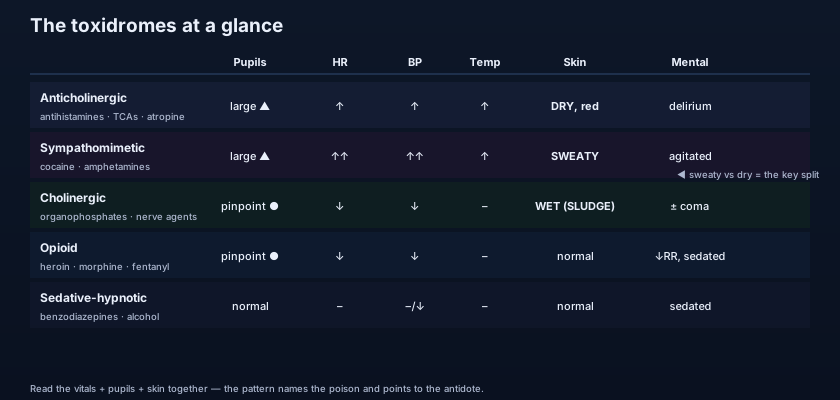
- Sympathomimetic and anticholinergic share the top half; the skin (sweaty vs dry) and bowel sounds separate them.
- Opioid = pinpoint pupils + depressed consciousness + respiratory depression; reversed by naloxone (short-acting — watch for re-sedation).
- Sedative-hypnotic depresses the CNS but relatively spares the vitals — preserved breathing points away from opioids.
- Serotonin syndrome = altered mind + autonomic instability + neuromuscular excitation (clonus, lower-limb hyperreflexia).
- Clonus and sweat separate serotonin syndrome from the dry, areflexic anticholinergic toxidrome.
- The pattern directs empirical treatment before any level returns — that is the whole point of a toxidrome.
- Giving flumazenil to reverse a presumed benzodiazepine overdose. In a habituated patient or a mixed (e.g. TCA) overdose it can strip away seizure protection and precipitate refractory seizures — the reflex antidote is often the wrong move.
- Reaching for physostigmine in every anticholinergic delirium. It can help pure cases, but given with an unrecognized TCA co-ingestion it can cause bradyasystole and seizures — cardiac status must be clear first.
- Treating cocaine hypertension with a non-selective beta-blocker. Blocking beta leaves alpha stimulation "unopposed," worsening vasoconstriction and hypertension — a classic sympathomimetic trap.
A 24-year-old is brought in agitated and hallucinating, temperature 39.5°C, heart rate 140, pupils widely dilated. His skin is hot, red and completely dry, his abdomen is distended with absent bowel sounds, and his bladder is palpably full. Which toxidrome — and clue — fits best?
- A toxidrome is the fingerprint a class of poison leaves across vital signs, pupils, skin, mental state and bowel sounds — letting you treat before levels return.
- Cholinergic (organophosphates): miosis, bradycardia, bronchorrhoea, wet SLUDGE/DUMBELS — treat with atropine (± pralidoxime before ageing). Anticholinergic is its dry mirror image.
- Sympathomimetic and anticholinergic look alike — sweaty vs dry skin (and bowel sounds) is the decisive discriminator.
- Opioid = pinpoint pupils + respiratory depression (naloxone); sedative-hypnotic spares breathing; serotonin syndrome adds clonus and lower-limb hyperreflexia.
- Goldfrank's Toxicologic Emergencies — Initial evaluation of the patient: vital signs and toxic syndromes.
- Katzung. Basic & Clinical Pharmacology — Management of the Poisoned Patient.
- Rang & Dale's Pharmacology — Cholinergic and adrenergic transmission; drug toxicity.
- Boyle JS, Bechtel LK, Holstege CP. Management of the critically poisoned patient. Scandinavian Journal of Trauma, Resuscitation and Emergency Medicine.
- Boyer EW, Shannon M. The Serotonin Syndrome. New England Journal of Medicine.
- Eddleston M, et al. Management of acute organophosphorus pesticide poisoning. The Lancet.