
Antimalarial Drugs: Hitting a Parasite That Changes Address
Malaria kills hundreds of thousands of people a year, and treating it means chasing a parasite that keeps moving house — from the liver, to the blood, and sometimes into a dormant hideout that reawakens months later. Each drug is built to strike a particular address. Learn where the parasite lives at each stage, and the whole antimalarial toolkit makes sense.
A traveller returns from a malaria-endemic region with cycles of fever, chills and sweats. Under the microscope, the diagnosis is clear: malaria parasites inside the red blood cells. But treating malaria isn't as simple as picking one drug — because the parasite doesn't stay in one place. It arrives through a mosquito bite, disappears into the liver to mature, then floods back into the bloodstream to cause the illness, and in some species leaves sleeper cells in the liver that can relaunch the disease months later. To beat it, you have to know which stage you're aiming at.
Two addresses: liver and blood
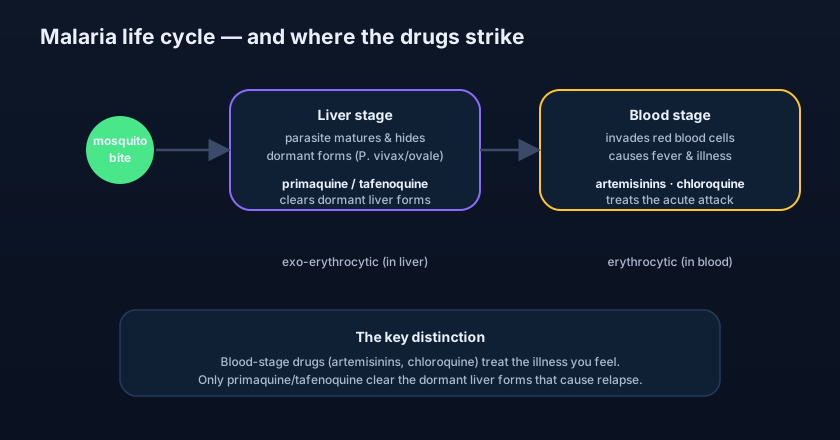
The parasite lives in two places, and drugs are grouped by which they clear. After a mosquito injects the parasite, it first goes to the LIVER (the exo-erythrocytic stage), where it multiplies silently. From there it invades RED BLOOD CELLS (the erythrocytic stage) — and this blood stage is what causes the fevers and the illness. Antimalarials divide neatly along this line. Blood-stage drugs — the artemisinins (artesunate, artemether), chloroquine, quinine, and partners like lumefantrine and mefloquine — kill the parasite in the blood and so treat the actual attack. But there's a catch with two species (P. vivax and P. ovale): they leave dormant forms in the liver called hypnozoites, true sleeper cells that can wake up and cause a relapse months later. No blood-stage drug touches them. Only primaquine (or tafenoquine) clears these liver hypnozoites — so a full cure of vivax malaria needs a blood-stage drug PLUS primaquine.
Artemisinins — the modern first line
The most important antimalarials today are the artemisinins, derived from a plant used in traditional Chinese medicine (a discovery that won a Nobel Prize). They kill blood-stage parasites faster than any other drug, which is life-saving in severe malaria — for which intravenous artesunate is the treatment of choice. But artemisinins are cleared from the body very quickly, so used alone the surviving parasites could regrow and develop resistance. The solution is artemisinin-based combination therapy (ACT): the fast, short-acting artemisinin is always paired with a slower, longer-acting partner drug (such as lumefantrine) that mops up the remainder. This combination principle — never give an artemisinin alone — is the cornerstone of protecting these precious drugs against resistance.
The older drugs — and their catches
Chloroquine was once the backbone of malaria treatment, but widespread resistance has stripped it of its role against P. falciparum in most of the world; it survives for chloroquine-sensitive infections and some prevention. Quinine, the ancient bark remedy, still treats severe malaria where artesunate isn't available, but it can cause a cluster of effects called cinchonism (tinnitus, headache, nausea) and dangerous low blood sugar. Two safety flags are worth memorising. First, primaquine and tafenoquine can trigger severe haemolysis in people with G6PD deficiency — so you must test G6PD status before prescribing them, exactly the same warning that attaches to sulfonamides and other oxidant drugs. Second, mefloquine (used for prevention and treatment) can cause vivid neuropsychiatric effects — bad dreams, anxiety, mood changes — so it's avoided in people with a psychiatric history.
- Malaria lives in two stages: liver (exo-erythrocytic) and blood (erythrocytic, causes illness).
- Artemisinin-based combination therapy (ACT) is first-line; IV artesunate for severe malaria.
- Never give an artemisinin alone — always combine, to prevent resistance.
- Only primaquine/tafenoquine clear dormant liver forms (hypnozoites) of P. vivax/ovale — needed for cure.
- Check G6PD before primaquine (haemolysis risk); avoid mefloquine in psychiatric history.
The single most-tested idea in malaria pharmacology is the difference between treating and curing P. vivax. A blood-stage drug (like an ACT) clears the parasites you can see in the blood and makes the patient better — but it leaves the hypnozoites asleep in the liver, so the disease relapses weeks or months later. To truly cure vivax you must add primaquine to kill those liver sleepers. And primaquine's own catch — haemolysis in G6PD deficiency — is the same oxidant-stress trap you met with sulfonamides. Two chapters, one recurring rule: check G6PD before an oxidant drug.
- Giving an artemisinin as monotherapy — always use a combination (ACT).
- Treating P. vivax without primaquine — the illness clears but relapses from liver hypnozoites.
- Prescribing primaquine without checking G6PD — risk of severe haemolysis.
- Relying on chloroquine for falciparum malaria — widespread resistance.
A patient with P. vivax malaria improves on an ACT but the infection could relapse. Why, and what prevents it?
- Malaria has a liver stage and a blood stage; the blood stage causes the illness.
- First-line: artemisinin-based combination therapy (ACT); IV artesunate for severe disease.
- Add primaquine/tafenoquine to cure P. vivax/ovale — they clear dormant liver hypnozoites.
- Check G6PD before primaquine; never give artemisinins as monotherapy.
- Katzung BG. Basic & Clinical Pharmacology — Antiprotozoal Drugs (antimalarials).
- Brunton LL, et al. Goodman & Gilman's The Pharmacological Basis of Therapeutics — Chemotherapy of malaria.
- WHO — Guidelines for the treatment of malaria.
- Rang HP, Dale MM, et al. Rang & Dale's Pharmacology — Antiprotozoal drugs.
- Whalen K. Lippincott Illustrated Reviews: Pharmacology — Antiprotozoal drugs.

